The Role of Torque and Angle in Ensuring Secure and Reliable Fastening
The Importance of Torque and Angle in Critical Fastening Applications
In critical industrial applications, the reliability of assembled components directly affects safety and performance.
Fastener tightening strategies play a decisive role in achieving stable and predictable clamp loads.
Torque and angle control have become essential parameters in modern bolting technology.
They are widely applied in energy, heavy machinery, automotive, shipbuilding, and industrial maintenance fields.
Understanding Torque in Fastener Tightening
Torque refers to the rotational force applied to a fastener during tightening.
It is calculated by multiplying the applied force by the distance from the rotation center.
If insufficient torque is applied, fasteners may loosen during operation.
Excessive torque can cause thread damage, bolt failure, or deformation of connected components.
Achieving accurate torque control is therefore essential for joint integrity.
Why Angle Control Complements Torque
Torque alone does not fully account for variations in friction.
Angle tightening introduces a more precise method by controlling fastener stretch.
After reaching a predefined base torque, the fastener is rotated by a specific number of degrees.
This controlled rotation stretches the bolt in a predictable manner.
The resulting stretch generates a consistent clamp load across assemblies.
Stress and Strain Behavior in Fasteners
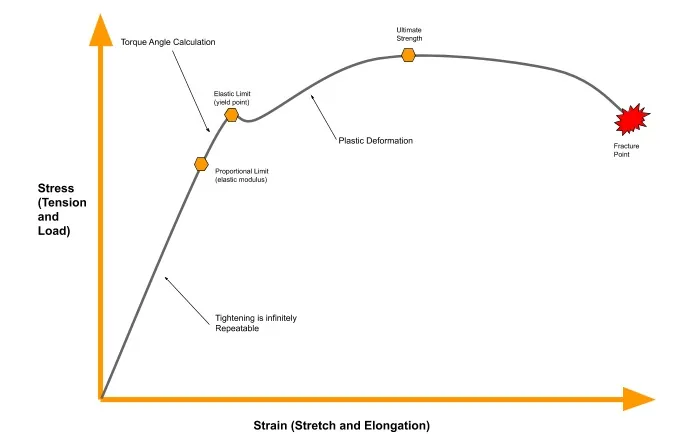
The stress-strain relationship of a fastener explains why torque-angle control is effective.
The optimal tightening zone lies between the elastic limit and the yield point.
Within this range, the fastener provides high clamp force while maintaining structural reliability.
This balance ensures both safety and durability in critical joints.
Stretch Bolts and High-Precision Applications
Stretch bolts are designed to operate beyond the elastic limit.
They undergo controlled plastic deformation during tightening.
Due to this behavior, stretch bolts must be replaced after each use.
They are commonly used in applications requiring superior sealing performance.
Typical examples include engine cylinder heads and high-load structural joints.
Tools for Accurate Torque and Angle Measurement
Traditional and Digital Measurement Methods
Historically, torque and angle measurements were performed using separate tools.
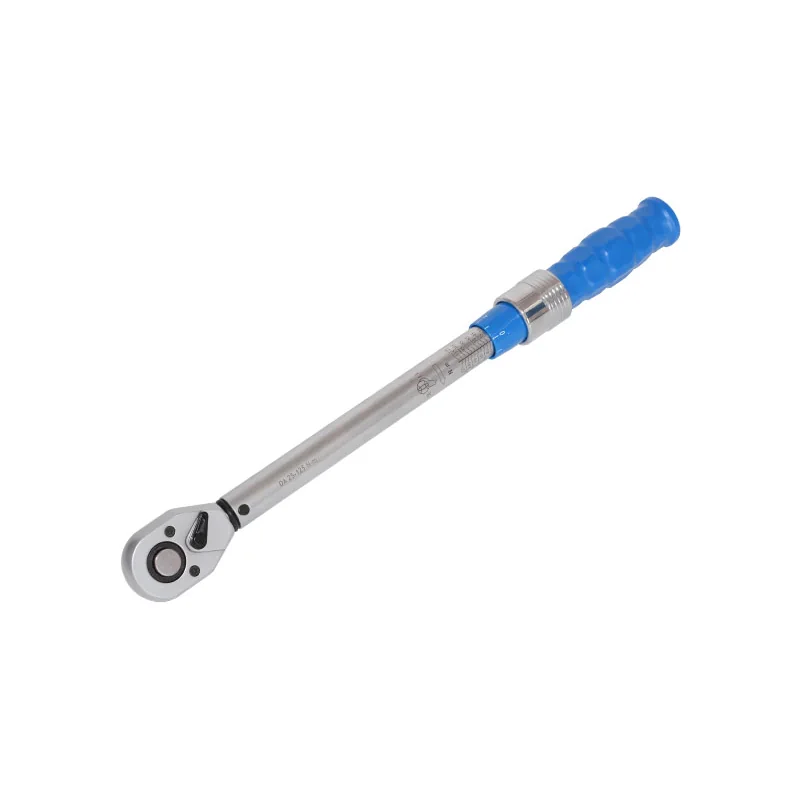
A torque wrench applied the initial torque value.
An external angle gauge measured the subsequent rotation.
This method required additional setup and operator experience.
Modern digital torque angle wrenches integrate both functions into one device.
They improve efficiency while reducing the risk of human error.
The Role of Torque Analyzers and Sensors
Torque analyzers and sensors are essential for verifying tightening accuracy.
They measure real output torque and angle values during operation.
These tools support quality control and calibration verification.
They also provide valuable data for engineering optimization.
In automated production environments, torque sensors are integrated into control systems.
Why Reliable Torque Control Matters for Procurement Decisions
Selecting proper torque and angle control tools directly affects product quality and safety.
Industrial users require tools that deliver repeatable accuracy and long service life.
Manufacturers with strong engineering capabilities and testing systems offer greater reliability.
Axion provides torque and angle control solutions designed for demanding industrial applications.
Proper tool selection reduces rework, downtime, and long-term operational risks.
Why Choose Axion™ as Your Supplier?
With 20 years of industry experience, Axion is a leading Chinese manufacturer of high-quality tools, offering competitive pricing and excellent customer service.We pride ourselves on exceptional quality control, extensive experience, and comprehensive after-sales service.